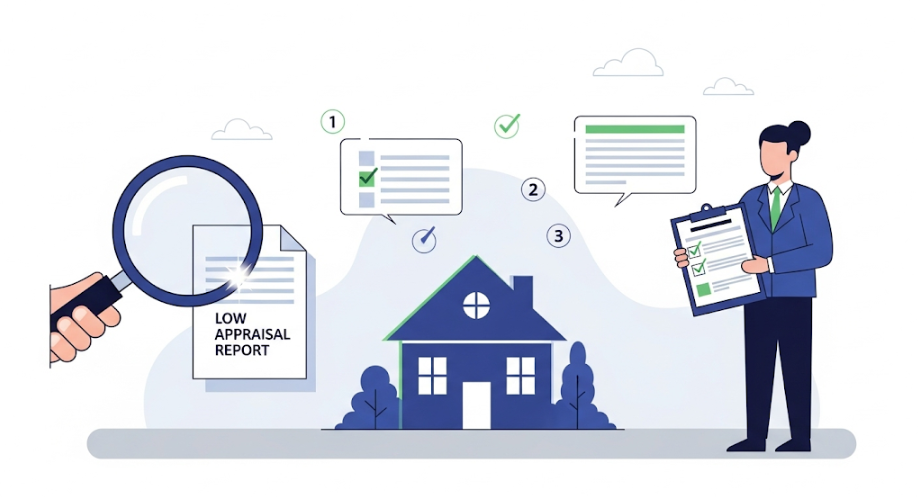
If an appraisal comes in lower than expected, you may be able to request a Reconsideration of Value, often called an ROV.
Many homeowners, buyers, and sellers have never heard of this process. Others have heard of it but do not know how to request a Reconsideration of Value the right way.
Done correctly, an ROV can lead to a review of factual errors and, in some cases, a revised appraisal.
Done poorly, it is often ignored.
Here is what you need to know.
What Is a Reconsideration of Value (ROV)?
A Reconsideration of Value is a formal request asking the lender to review an appraisal for factual errors or missing information.
It is not:
- An argument about price
- An opinion about what the home should be worth
- A complaint sent directly to the appraiser
It is a structured process that goes through the lender and, when appropriate, back to the appraiser for review.
When You Can Request a Reconsideration of Value
You may request an ROV when there is evidence that the appraisal contains:
- Incorrect square footage
- Missed finished areas
- Missing upgrades
- Inaccurate property details
- Weak or outdated comparable sales
- Better comparable sales that were available at the time
An ROV is based on facts and support, not frustration.
How to Request a Reconsideration of Value (ROV)
If you want the request to be taken seriously, the process matters.
Step 1: Get the Full Appraisal Report
Ask your lender for the full appraisal report. You will need the entire document, not a summary.
Review:
- Property description
- Measurements
- Condition and quality ratings
- Comparable sales
- Adjustments
- Appraiser comments
This report is the foundation of your ROV request.
Step 2: Identify Specific, Verifiable Issues
Successful ROVs focus on clear, factual problems.
Examples include:
- Square footage that does not match plans or prior records
- Finished space labeled as unfinished
- Upgrades missing from the report
- Comparable sales that are inferior or outdated
- Nearby better sales that were ignored
General statements like “the value is too low” do not work.
Step 3: Gather Supporting Evidence
Every issue you raise should be supported.
This may include:
- Floor plans or surveys
- Photos of finished areas or upgrades
- Receipts or permits
- MLS data for better comparable sales
- Public records
Evidence should be organized and easy to follow.
Step 4: Submit the ROV Through the Lender
You do not send an ROV directly to the appraiser.
The request goes through:
- Your loan officer
- The lender’s appraisal or underwriting department
The lender decides whether the request is valid and whether it will be forwarded for review.
Step 5: Be Clear, Professional, and Structured
Tone matters.
ROV requests that work are:
- Clear
- Factual
- Organized
- Professional
Requests that fail are often emotional, disorganized, or unsupported.
What Happens After You Submit an ROV?
Once submitted:
- The lender reviews the request
- The appraiser may be asked to respond
- The appraiser may accept, reject, or partially address the issues
The value may:
- Stay the same
- Be revised
- Be explained in more detail
There is no guarantee of a change, but a proper request ensures your concerns are reviewed.
Common Mistakes That Kill ROV Requests
Many Reconsideration of Value requests fail because of avoidable mistakes, such as:
- Arguing instead of documenting
- Submitting too much information
- Submitting irrelevant information
- Using emotional language
- Contacting the appraiser directly
- Not following lender procedures
Knowing what not to do is just as important as knowing what to do.
Why Most People Struggle With the ROV Process
Most people fail when trying to request a Reconsideration of Value because:
- They do not understand how appraisals work
- They do not know what evidence matters
- They do not know how to structure the request
- They do not know what language to use
As a result, even valid issues are often ignored.
A Smarter Way to Request a Reconsideration of Value
Requesting an ROV is not about luck. It is about:
- Knowing what to look for
- Knowing what to include
- Knowing what to leave out
- Knowing how to communicate
When done correctly, the process is clear and controlled.
Want a Step-by-Step ROV System?
If you want a clear system that shows you:
- How to review your appraisal
- How to spot value-impacting errors
- How to organize evidence
- How to submit an ROV the right way
- What emails and scripts to use
- What mistakes to avoid
You can get the full AppraisalKey Toolkit from Appraisal Key.
Instead of guessing, you get structure and clarity.
It was built for buyers, sellers, homeowners, and agents who need answers now.
Final Thought
A low appraisal does not always mean your property is worth less. In many cases, it means the appraisal deserves a closer look.
Knowing how to request a Reconsideration of Value (ROV) gives you leverage, control, and a better chance of protecting your property’s true value.