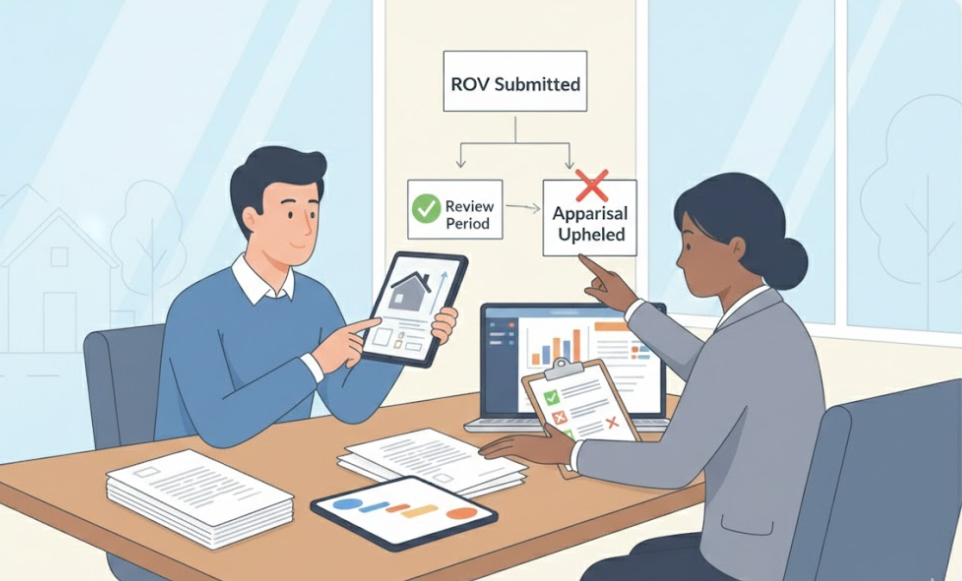
Submitting a Reconsideration of Value, often called an ROV, can feel like sending something into a black hole.
Once it is submitted, most people are left wondering what happens next, how long it will take, and whether anyone is actually reviewing it.
Here is what typically happens after you submit a Reconsideration of Value and what to expect at each stage.

First: The Lender Reviews Your Request
After submission, the ROV does not go straight to the appraiser.
The lender reviews it first.
At this stage, the lender checks:
- Whether the request follows their rules
- Whether the issues raised are factual
- Whether supporting documents are included
- Whether the request is organized and clear
If the lender decides the request does not meet their guidelines, it may stop here.
This is one of the most common points where ROVs fail.

If Approved: The Appraiser Is Asked to Respond
If the lender approves the request, they forward it to the appraiser for review.
The appraiser is asked to:
- Review the specific issues raised
- Review the supporting evidence
- Respond in writing
The appraiser may agree, disagree, or partially agree with the request.
They are not required to change the value.

What the Appraiser Actually Reviews
Appraisers are not redoing the entire appraisal.
They are reviewing:
- The exact issues raised
- The exact evidence submitted
- Whether corrections are supported
Anything not clearly presented is unlikely to be considered.
This is why clarity and structure matter so much.
Possible Outcomes After Appraiser Review
Once the appraiser responds, one of several things usually happens.

Outcome 1: The Value Stays the Same
This is the most common outcome.
The appraiser explains why the original value stands and addresses the issues raised.
Even when the value does not change, this response becomes part of the loan file.

Outcome 2: The Value Is Revised
In some cases, the appraiser agrees that errors or omissions affected value.
This may result in:
- A revised value
- Updated commentary
- Corrected factual details
Revisions are usually modest, not dramatic.

Outcome 3: Partial Corrections Are Made
Sometimes the appraiser:
- Corrects factual errors
- Updates descriptions
- Improves explanations
But leaves the value unchanged.
This still improves accuracy, even if it does not change the number.
The Lender Makes the Final Decision
After the appraiser responds, the lender reviews the response and decides how to proceed.
The lender determines:
- Whether the loan still qualifies
- Whether terms need to change
- Whether additional steps are allowed
The appraiser does not control the loan decision.
How Long This Process Usually Takes
Most ROVs take between:
- 3 and 14 business days
Timing depends on:
- Lender review speed
- Appraiser workload
- Quality of the request
- Time of submission
Poorly prepared requests often take longer.
Why Communication Often Feels Slow
ROV communication feels slow because:
- Updates are not always shared in real time
- Multiple departments may be involved
- Lenders wait for written responses
Silence does not always mean nothing is happening.
Common Mistakes After Submitting an ROV
After submission, people often hurt their chances by:
- Contacting the appraiser directly
- Sending additional information without being asked
- Re-arguing the case emotionally
- Pressuring the lender
Once submitted, patience matters.
What to Do While Waiting for a Decision
While waiting:
- Understand your deadlines
- Discuss backup options with your agent or lender
- Prepare for more than one outcome
- Avoid making rushed decisions
An ROV is a review, not a promise.
If the Value Does Not Change
If the value stays the same, options may still include:
- Renegotiating terms
- Bringing cash
- Switching lenders
- Requesting a second appraisal if allowed
- Walking away when contingencies permit
Knowing your options helps reduce stress.
Why Most People Feel Unprepared at This Stage
Most people submit an ROV without knowing:
- What happens after submission
- Who reviews it
- How decisions are made
- What outcomes are realistic
This uncertainty creates unnecessary anxiety.
A Smarter Way to Navigate the ROV Process
The ROV process works best when:
- Expectations are realistic
- The request is done right the first time
- The process is understood
Most problems happen because people guess.
Want to Know What to Expect Before You Submit?
If you want to know:
- What happens after an ROV is submitted
- How lenders and appraisers actually review requests
- What outcomes are realistic
- What mistakes to avoid
- What to do if the value stays the same
The How to Fight a Low Appraisal AppraisalKey Toolkit explains the full process from start to finish.
Instead of guessing, you get clarity.
Submitting a Reconsideration of Value is only part of the process.
Knowing what happens after you submit a Reconsideration of Value helps you stay calm, avoid mistakes, and make better decisions while waiting for the outcome.