
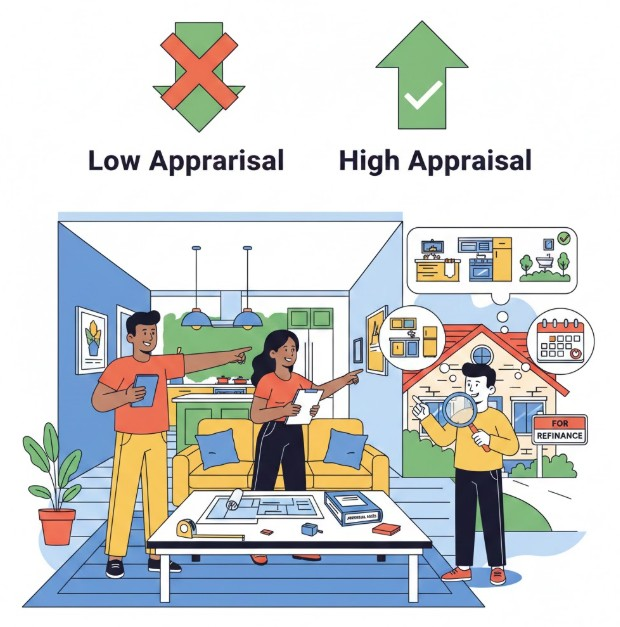
A low appraisal is one of the most common reasons a refinance fails.
Homeowners often focus on rates and paperwork, but forget one thing that controls the outcome. The appraisal.
If you want to know how to avoid a low appraisal before refinancing, the key is preparation. Most low values are not random. They are caused by missed details, weak data, or poor presentation.
Here is what to understand before the appraiser ever shows up.

Why Low Appraisals Happen on Refinances
Refinance appraisals come in low for a few common reasons:
- The appraiser misses upgrades or finished areas
- The property details are wrong
- Comparable sales are weak or outdated
- The home is not presented well
- Important information is never shared
Unlike a purchase, there is no contract price to anchor value. The appraisal carries more weight, which makes preparation even more important.

Start With the Basics That Matter
Before refinancing, make sure the basics are correct.
Check:
- Square footage in public records
- Bedroom and bathroom counts
- Finished basement or attic space
- Garages, outbuildings, and lot size
If these are wrong, the appraisal can be wrong too.

Document Improvements and Upgrades
One of the biggest mistakes homeowners make is assuming upgrades are obvious.
They are not.
Appraisers rely on what they can see and verify. If upgrades are not documented, they may not be considered.
Helpful items include:
- A simple list of upgrades
- Dates work was completed
- Before and after photos
- Permits or invoices when available
This information should be organized and easy to review.

Understand How Comparable Sales Affect Value
Comparable sales are the foundation of an appraisal.
Low appraisals often happen when:
- Sales are too old
- Sales are not truly similar
- Better nearby sales are missed
You cannot control the market, but you can understand how it affects your value and avoid surprises.

Prepare the Property for the Appraisal Visit
Presentation matters more than people realize.
Before the appraisal:
- Clean and declutter
- Make sure all rooms are accessible
- Turn on lights
- Secure pets
- Make finished spaces obvious
You are not staging for photos. You are making sure nothing is missed.
Do Not Assume the Appraiser Knows Everything
Appraisers do not know your home the way you do.
They may not know:
- What was remodeled
- What was added
- What problems were fixed
- What makes your home different
Clear, factual information helps prevent oversights.
Avoid Last-Minute Refinancing Decisions
Timing matters.
Refinancing during:
- Market slowdowns
- Seasonal dips
- Limited recent sales
can increase appraisal risk.
Understanding market timing can help set realistic expectations before you apply.
Why Most People Still Get a Low Appraisal
Most homeowners do not prepare because:
- They do not know what matters
- They assume the appraisal will take care of itself
- They find out too late
By the time the appraisal comes in low, options are more limited.
A Smarter Way to Avoid Problems Before They Start
Avoiding a low appraisal before refinancing is about:
- Knowing what affects value
- Preparing the right information
- Presenting the property clearly
- Avoiding common mistakes
It is easier to prevent a low appraisal than to fix one after the fact.
Want a Clear Pre-Refinance Appraisal Plan?
If you want to know:
- How to prepare before the appraisal
- What information actually matters
- What mistakes cause low values
- How to reduce appraisal risk
- What to do if the value still comes in low
The How to Fight a Low Appraisal AppraisalKey Toolkit covers both prevention and response, step by step.
Instead of guessing, you get a plan.
You cannot control the market, but you can control preparation.
Knowing how to avoid a low appraisal before refinancing helps protect your time, your rate, and your financial goals.