
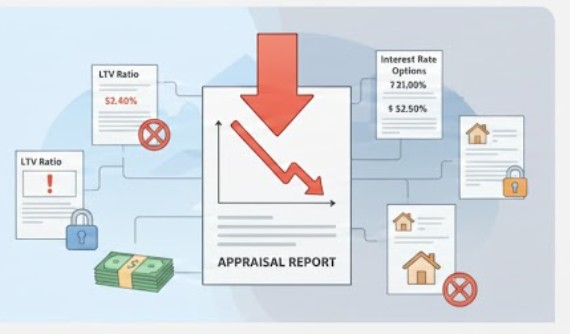
A refinance appraisal coming in low can stop everything in its tracks.
If you are refinancing to lower your rate, remove PMI, or take cash out, the appraisal value directly affects what you can do. When that value is lower than expected, many homeowners are left wondering what happens next.
Here is what actually happens if a refinance appraisal comes in low and what options may still be available.

Why Refinance Appraisals Matter So Much
Unlike a purchase, there is no contract price in a refinance. The lender relies almost entirely on the appraisal to determine:
- Loan eligibility
- Loan-to-value ratio
- Cash-out limits
- PMI removal eligibility
- Interest rate options
When the appraisal is low, those numbers change immediately.

What Happens First After a Low Refinance Appraisal
When a refinance appraisal comes in low, the lender will:
- Review the appraisal internally
- Recalculate your loan terms
- Determine whether the loan still qualifies
In some cases, the refinance may still move forward with different terms. In other cases, it may stall or be denied.

Common Outcomes of a Low Refinance Appraisal
1. The Refinance Still Works, But on Worse Terms
If the value is only slightly low, the loan may still qualify, but:
- The rate may be higher
- PMI may remain in place
- Cash-out amounts may be reduced
This outcome is common when the value misses expectations by a small margin.

2. The Refinance No Longer Qualifies
If the appraisal significantly affects loan-to-value limits, the lender may:
- Deny the refinance
- Require changes to the loan structure
- Ask you to wait and reapply later
This often happens when homeowners are close to qualification thresholds.

3. The Lender Allows a Review of the Appraisal
If the appraisal contains factual errors or missing information, the lender may allow a review through a Reconsideration of Value request.
This is not automatic and depends on:
- Lender guidelines
- The quality of the evidence
- The issues raised
A review does not guarantee a change, but it can correct mistakes.

What You Can Do After a Low Refinance Appraisal
When a refinance appraisal comes in low, homeowners typically have a few options.

Review the Appraisal Carefully
Before making any decisions, request and review the full appraisal report.
Look for:
- Incorrect square footage
- Missing finished areas
- Missing upgrades
- Weak or outdated comparable sales
- Factual errors
Many refinance appraisals contain small mistakes that add up.
Consider a Reconsideration of Value
If clear issues are found, a structured review request may be possible.
This requires:
- Specific factual corrections
- Supporting documentation
- Professional communication through the lender
This step must be done correctly to be considered.

Adjust Expectations or Timing
If the value cannot be changed, homeowners may choose to:
- Proceed with revised loan terms
- Wait and refinance later
- Improve the property before reapplying
- Monitor market conditions
The right choice depends on your goals and timeline.
Why Many Homeowners Feel Stuck
Refinance appraisal issues feel overwhelming because:
- There is little explanation from lenders
- The process feels rigid
- Options are not clearly explained
- Time and rate pressure add stress
Many homeowners assume there is nothing they can do when that is not always the case.
Common Mistakes After a Low Refinance Appraisal
Homeowners often make things worse by:
- Arguing about value instead of facts
- Contacting the appraiser directly
- Submitting unorganized information
- Relying on online estimates
- Giving up too quickly
These mistakes can close doors that were still open.
A Smarter Way to Handle a Low Refinance Appraisal
A low refinance appraisal does not always mean the end of the road.
The key is knowing:
- What qualifies for review
- What evidence matters
- What lenders actually consider
- What options still exist
Guessing usually leads to frustration. Structure leads to clarity.
Want a Clear Refinance Appraisal Game Plan?
If you want to know:
- What happens after a refinance appraisal comes in low
- Whether a review makes sense
- How to identify real errors
- How to submit a request correctly
- What to do if the value stays the same
The How to Fight a Low Appraisal AppraisalKey Toolkit walks you through refinance scenarios step by step.
Instead of guessing, you get a clear plan.
A low refinance appraisal can feel final, but it is not always the end.
Knowing what happens if a refinance appraisal comes in low helps you respond calmly, avoid mistakes, and protect your financial goals.